Sleeping Giants: The Billion-Dollar Math Behind Gaming's Biggest IP Revivals
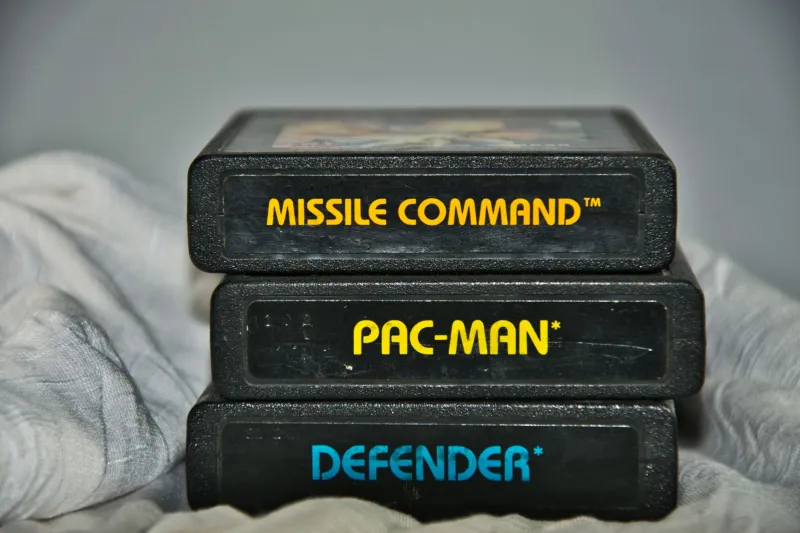
There's a graveyard somewhere in the back offices of every major publisher, and lately, studios have been doing a lot of digging. Franchises that went dark a decade ago — some even longer — are clawing their way back into the spotlight, and the numbers attached to their returns are genuinely staggering. But not every resurrection goes smoothly. For every Final Fantasy VII Remake that redefines what a comeback can look like, there's a cautionary tale buried two rows over.
So what's actually driving this? And more importantly, what separates the franchises that come back swinging from the ones that stumble out of the coffin and immediately fall back in?
The Nostalgia Economy Has a Shelf Life — And Studios Know It
Here's the uncomfortable truth that publishers don't love advertising: nostalgia is a depreciating asset. The audience that grew up with a franchise ages out of peak spending years. New players have no emotional attachment to it. The window where a dormant IP still carries genuine cultural weight is finite, and studios are increasingly aware that they either act or permanently lose the opportunity.
The Final Fantasy VII situation is probably the clearest case study in recent memory. Square Enix sat on that IP for years while fans begged for a remake. When they finally pulled the trigger, the project became one of the most commercially successful launches in the franchise's history. But here's what's easy to miss — the timing mattered as much as the execution. The generation that played the original in the late '90s was squarely in their 30s, with disposable income and a powerful appetite for revisiting childhood touchstones. Wait another five years, and that math starts looking different.
Analysts have started calling this the "nostalgia sweet spot," roughly the 20-to-30-year window after a franchise's peak relevance. Hit it right, and you're printing money. Miss it, or botch the execution, and you've burned the IP for a generation.
Fighting Games and the Niche Revival Playbook
Not every comeback story involves a hundred-million-dollar budget and a years-long development cycle. Some of the most interesting IP revivals happening right now are in the fighting game space, where smaller studios are betting that passionate, vocal communities can carry a franchise back to viability.
The pattern tends to look something like this: a beloved fighting game goes dormant after its original publisher loses interest or goes under. A dedicated fanbase keeps the flame alive through emulation, tournament play, and relentless online campaigning. Eventually, either the original rights holder notices the grassroots momentum or a new studio acquires the IP and takes a calculated swing.
What's fascinating is how often these smaller-scale revivals punch above their weight. A game that sells 500,000 units would be considered a flop for a AAA franchise, but for a niche fighting game with low development overhead, it can be genuinely profitable — and more importantly, it re-establishes the IP's viability for future, larger investments.
The community-driven nature of fighting game culture also means the marketing practically writes itself. Tournament streams, content creator hype cycles, and the inherently competitive, shareable nature of the genre give revivals organic visibility that a generic action game with the same budget simply couldn't buy.
Persona's Slow Burn and the Art of the Patient Revival
Not every comeback is a sudden explosion. Some franchises stage the most effective kind of return: a gradual, almost invisible climb back to relevance.
Persona is the textbook example. The series existed in relative obscurity in the US for years, beloved by a small but intensely dedicated fanbase while mainline Shin Megami Tensei games did most of the heavy lifting for Atlus. Then Persona 4 started building something. Persona 5 finished the job. By the time Persona 5 Royal dropped, the franchise had completed one of the most patient, methodical image rehabilitations in gaming history — transforming from a niche JRPG curiosity into a genuine mainstream phenomenon with anime adaptations, concert tours, and collaborations that would have seemed absurd ten years earlier.
What Atlus understood, and what a lot of publishers miss, is that a revival doesn't always require a dramatic reboot. Sometimes it requires doubling down on what made the original special, polishing the rough edges, and trusting that the audience will follow if the quality is there. No gimmicks. No forced modernization. Just commitment to the craft.
The Franchises That Stay Buried — And Why
For all the success stories, the gaming graveyard is full of franchises that tried to come back and just... didn't make it. The reasons vary, but a few patterns show up repeatedly.
First, there's the problem of audience fragmentation. Some franchises were popular at a specific moment in gaming history because they filled a gap that no longer exists. The genre moved on, the mechanics aged poorly, and the nostalgia isn't strong enough to override the frustration of playing something that feels genuinely outdated. No amount of HD remastering fixes a fundamentally broken design.
Second, there's the rights mess. A surprising number of beloved IPs are trapped in legal and corporate limbo — passed between publishers through acquisitions, split between multiple rights holders, or tied up in disputes that make development practically impossible. Fans petition for revivals that simply can't happen, at least not without years of legal untangling.
And then there's the most painful scenario: the franchise that comes back wrong. A beloved IP handed to a team that doesn't understand it, rushed to market to capitalize on anniversary hype, or fundamentally redesigned to chase trends rather than honor what made the original work. These failures don't just disappoint fans — they actively damage the IP, making future attempts even harder to greenlight.
What the Next Wave Looks Like
If you're paying attention to what publishers are quietly acquiring and what anniversaries are coming up in the next few years, the next wave of revivals is already taking shape. Industry watchers have been eyeing several dormant properties that hit their nostalgia sweet spot windows right around now.
The smart money seems to be on franchises with strong visual identities, built-in competitive communities, or established multimedia footprints — properties that can be revived not just as games but as entertainment ecosystems. Because that's ultimately what separates the billion-dollar comeback from the modest niche revival: the ability to extend beyond the game itself into streaming, merchandise, live events, and the kind of cultural conversation that keeps an IP relevant long after launch week.
The graveyard is getting emptier. Whether that's a good thing depends entirely on who's doing the digging — and whether they actually care about what they're bringing back to life.