Empty Shelves, Full Price Tags: The Gaming Peripheral Shortage Nobody Warned You About
You finally decided to upgrade your setup. Maybe the drift on your old controller got bad enough that you're losing gunfights you should be winning, or maybe you just wanted to treat yourself to something with a little more heft and precision. So you hopped online, checked the usual spots — Best Buy, Target, GameStop — and ran into the same wall: out of stock, unavailable, ships in four to six weeks, or a third-party seller charging twice the retail price with a straight face.
Welcome to the gaming peripheral market in 2024, where scarcity isn't a bug. For a lot of people moving product in the secondary market, it's very much a feature.
The Supply Chain Story Nobody Wants to Tell Twice
If the phrase "supply chain issues" makes your eyes glaze over, fair enough — it's been overused to explain everything from delayed car deliveries to empty grocery shelves. But in the gaming accessories space, the disruption never really resolved the way it did in other industries. The hangover from COVID-era manufacturing slowdowns hit peripheral makers especially hard, and the recovery has been uneven at best.
A lot of premium controller components — the precision analog sticks, the tactile trigger mechanisms, the proprietary circuit boards that make high-end pads feel different from a cheap knockoff — are manufactured in a tight network of Asian factories that got squeezed from multiple directions simultaneously. Raw material costs climbed. Shipping container rates spiked. Certain microchips that regulate haptic feedback and wireless connectivity remained in short supply long after the broader semiconductor crunch supposedly eased up.
Brands like Sony, Microsoft, and third-party heavyweights like SCUF and Razer were all managing the same problem: demand was outpacing what they could actually put on shelves. And unlike a console, where a company can make a strategic call to throttle supply and build hype, accessories are supposed to be the reliable, always-available part of the ecosystem. When they're not, it creates a specific kind of frustration — the kind where you just need a thing and can't get it.
Scalpers Found a New Playground
Here's where it gets genuinely aggravating. The same infrastructure that made scalping PS5 consoles and GPU cards a full-time hustle for some people didn't disappear when those product categories stabilized. It just migrated.
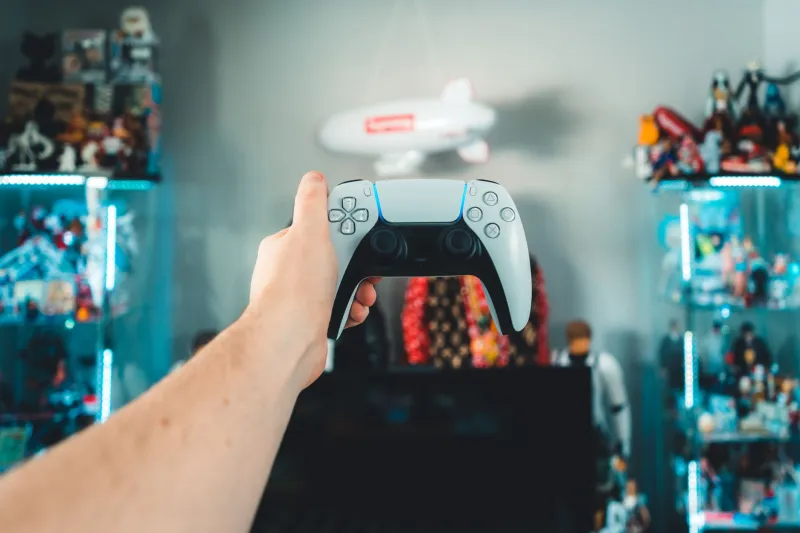
Bot networks that were originally built to sweep up limited sneaker drops and console launches got repurposed. Premium controllers — particularly limited edition colorways, officially licensed pro variants, and anything that sells out within hours of a restock announcement — became the new target. A quick scroll through eBay or StockX on any given week will show you PlayStation DualSense Edge controllers listed at $50 to $100 above MSRP, Xbox Elite Series 2 pads going for nearly double retail, and specialty third-party controllers priced like they're made of something rarer than plastic and circuitry.
The kicker is that these aren't even especially rare objects. They're mass-produced consumer electronics. But manufactured scarcity — whether intentional or accidental — turns ordinary products into something people are willing to overpay for rather than wait on.
What It's Actually Doing to How Gamers Buy Gear
Talk to enough people in gaming communities and you start to notice a shift in how they approach peripheral purchases. The old model was simple: research, find the best option in your budget, buy it. That model assumes availability. When availability gets unreliable, the decision-making process gets a lot messier.
Some gamers have adopted what you might call a "grab it when you see it" mentality — buying at retail the moment something comes back in stock, even if the timing isn't ideal, because waiting might mean another three-month drought. Others have started treating mid-range options as legitimate upgrades rather than compromises, discovering that a $60 controller they can actually get their hands on beats a $150 controller they've been chasing for six months.
There's also been a quiet but real uptick in interest in refurbished and open-box gear. Retailers like Amazon Renewed and even physical stores have seen more traffic from buyers who would have previously turned their nose up at anything that wasn't sealed in original packaging. When new is impossible to find and the used market is almost as expensive anyway, the calculus changes.
And then there's the group that's just... opting out of the premium tier entirely. Third-party budget controllers from brands that most enthusiasts would have dismissed a few years ago have been getting a second look, partly because they've genuinely improved, and partly because paying $180 for a first-party pro pad stopped feeling like a reasonable ask when stock reliability is this inconsistent.
The Price Floor Keeps Rising
Even when controllers are technically available, the baseline cost of entry has crept up in ways that don't get enough attention. Standard controllers from the major platform holders have seen quiet price increases over the past couple of years. Microsoft bumped the standard Xbox Wireless Controller. Sony's DualSense launched at a price point higher than its predecessor, and the Edge variant sits at a level that would have seemed extreme for a first-party pad five years ago.
Combine natural price inflation with supply pressure and secondary market activity, and you get a market where the "affordable" option keeps getting more expensive in real terms. For a lot of players — especially younger gamers or anyone on a tighter budget — this isn't abstract. It's the difference between playing comfortably and playing on gear that's starting to fail, because replacing it at current prices just isn't realistic right now.
Where Does It Go From Here?
There are a few reasons for cautious optimism, if you're looking for them. Supply chains have stabilized in some categories, and there's reason to believe controller availability will gradually normalize as manufacturers build up more regional inventory buffers. Some brands have also started being more transparent about restock schedules, which at least gives buyers a fighting chance against bot networks.
But the deeper issue — the fact that premium peripherals have become a speculative commodity rather than a simple consumer product — doesn't go away just because shelves fill up temporarily. As long as demand stays high and supply stays even slightly constrained, the conditions that created this mess will still be there, waiting.
For now, the most practical advice is also the most boring: set stock alerts, buy at retail the moment you get the chance, and don't let FOMO push you into paying scalper prices if you can hold out. Your wallet will thank you. The scalpers definitely won't.