Hands-On and All In: Why the Controller in Your Grip Matters More Than Any Spec Sheet
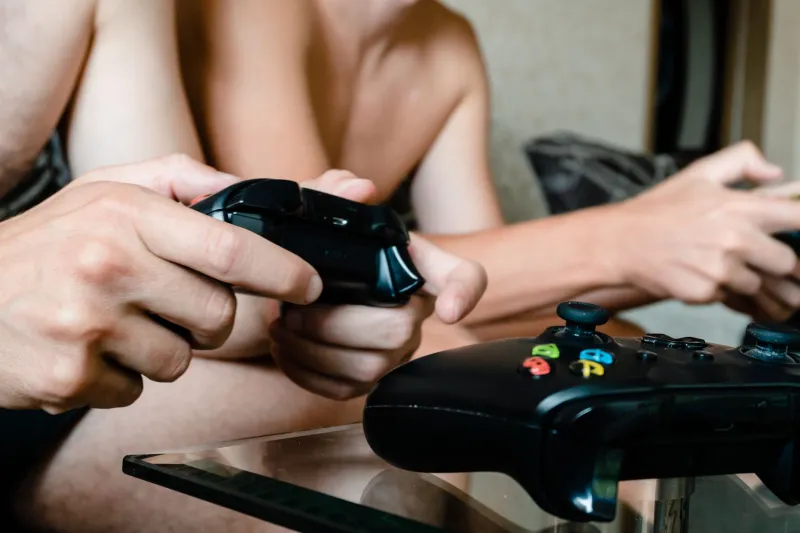
Every few years, a new console generation drops and the internet absolutely loses its mind. Benchmark comparisons flood Reddit. YouTube channels spend forty-five minutes dissecting shadow rendering. Twitter — or whatever we're calling it this week — turns into a full-contact sport. And through all of it, the actual argument nobody wants to have out loud sits right there in plain sight: it's about how the thing feels in your hands.
Not the pixels. Not the frames. The feel.
That's the conversation the gaming industry's marketing machine doesn't want you centering, because "our thumbstick resistance is tuned for precision" doesn't move units the way "8K graphics" does. But spend five minutes talking to a die-hard PlayStation loyalist about why they'll never switch, or corner an Xbox lifer at a party, and the conversation almost always drifts away from specs and straight into texture, weight, and muscle memory.
The Body Remembers What the Brain Forgets
Here's something sports psychologists have known forever: physical repetition builds identity. The way a basketball player knows their shot before they think about it. The way a guitarist finds a chord without looking. Gaming works the same way, and controllers are the instrument.
Anyone who grew up with the original PlayStation controller — that symmetrical, almost alien-feeling layout — and then tried to use an Xbox controller for the first time knows the disorientation. The offset thumbsticks feel wrong in a way that's hard to articulate but impossible to ignore. And vice versa. Xbox kids picking up a DualSense for the first time often report the same low-level friction, like speaking a language you studied but never quite mastered.
That discomfort isn't a flaw. It's evidence of how deep controller ergonomics actually go. Your hands have logged hundreds — sometimes thousands — of hours building a physical relationship with a specific layout. When that changes, even slightly, your whole sense of play shifts.
Haptics Changed the Game and Nobody Gave It Enough Credit
When Sony shipped the DualSense with the PlayStation 5, the gaming press spent about three days marveling at the adaptive triggers and then moved on to arguing about load times. That was a mistake.
The haptic feedback system in modern controllers is genuinely one of the most underrated developments in gaming this decade. Pull back a bowstring in Horizon Forbidden West and you feel actual resistance building in your fingertips. Drive over gravel in a racing game and the texture comes through your palms. It sounds like a gimmick until you've used it for a week and then gone back to a controller without it — suddenly everything feels hollow.
Microsoft has taken a different path, investing heavily in the overall build quality and customization of the Xbox controller, leaning into a kind of premium durability that appeals to players who want something that feels built to last rather than built to impress. Neither approach is wrong. They're just speaking to different physical preferences — and those preferences, once formed, are incredibly sticky.
Button Layout and the Illusion of Objectivity
Ask someone which controller layout is objectively better and they'll give you a confident answer. Ask them to back it up without referencing what they grew up with and watch the confidence evaporate.
The face button placement debate — PlayStation's diamond arrangement versus Xbox's slight variation, Nintendo's entirely different philosophy — is almost entirely cultural. Muscle memory dressed up as logic. The argument that one layout is more ergonomically sound than another tends to collapse the moment you account for hand size variation, play style, and genre preference. A fighting game player's ideal controller looks nothing like what a strategy gamer wants. A PC player who swears by a keyboard and mouse is operating in a different physical universe entirely.
And yet people will defend their preferred layout with the energy of someone protecting a family recipe. Because in a real sense, that's what it is — something passed down through years of play, something personal.
Why This Drives Console Loyalty More Than Marketing Ever Could
Here's the thing the spec-sheet warriors miss: hardware loyalty is emotional, not rational. People don't stay in a gaming ecosystem because they've run the numbers. They stay because switching feels like learning to write with your non-dominant hand.
The PlayStation community and the Xbox community aren't really divided over exclusives or online infrastructure, though those things matter. They're divided over a physical relationship with a piece of plastic and circuitry that started when they were kids and never really ended. The controller is the first point of contact with every game you've ever loved. It's there for every clutch moment, every rage quit, every late-night session that turned into an early morning.
That's not something a benchmark can measure.
Nintendo understood this before anyone else did. The company has made controllers that look genuinely bizarre — the Wii Remote, the Joy-Con, the original N64 controller that required what some people called a "third hand" — and somehow built some of the most devoted fans in gaming history. Because the physical experience of playing Nintendo games is unlike anything else, and once it's in your body, it stays there.
The PC Master Race Has Its Own Version of This Problem
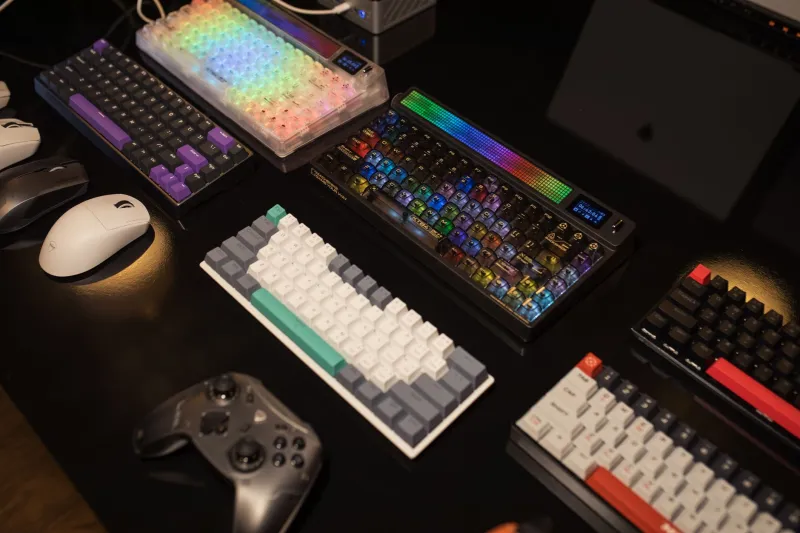
PC gamers love to position themselves above the console wars entirely, but they're not immune to this. The mechanical keyboard community alone is evidence that tactile preference runs just as deep on the desktop. Switch types, actuation force, keycap material — these are the PC equivalent of thumbstick tension debates. And don't even get started on mouse preferences, where people will spend two hundred dollars to find a device that fits their grip style with millimeter precision.
The input method shapes the play. The play shapes the player. It's the same loop, just with different hardware.
What the Industry Should Actually Be Selling
If gaming companies were being honest with their marketing, they'd lead with feel. Not frames. Not resolution. The first question a new console pitch should answer is: what does it feel like to play this?
Some of them are starting to get there. Sony's DualSense advertising has leaned into the sensory angle more than any previous PlayStation controller campaign. That's smart. That's targeting the actual reason people choose sides.
Because at the end of the day, nobody's lying in bed at night thinking about teraflops. They're thinking about the game they just played — and the controller that made them feel like they were actually inside it.
The console war was never about specs. It was always about touch. And the sooner we admit that, the more honest the whole conversation gets.