Grip It and Rip It: How the Thing in Your Hands Defines the Gamer You Are
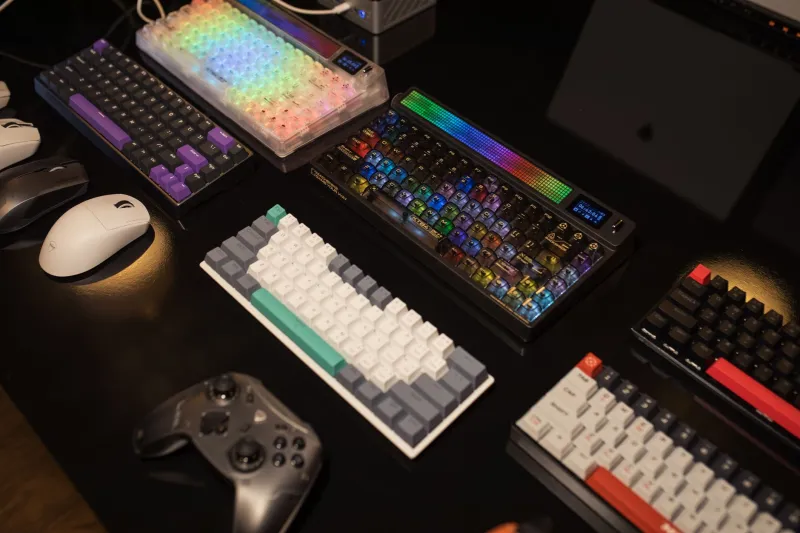
Walk into any serious gaming setup and you'll notice something almost immediately — the hardware on the desk tells a story before a single game launches. A mechanical keyboard flanked by a high-DPI mouse screams PC master race. A worn DualSense sitting on the couch cushion says something else entirely. And if you spot a fight stick with custom artwork propped next to a monitor? You already know that person has opinions about frame data.
The controller wars have been quietly raging for decades, but somewhere along the way the debate stopped being just about comfort and crossed into something closer to identity. What you grip matters — not just for performance, but for how you experience a game at a fundamental level.
More Than a Preference — It's a Philosophy
Ask any competitive player why they use what they use and prepare for a TED Talk. The keyboard-and-mouse crowd will cite precision, customizable key bindings, and the fact that PC shooters were practically designed around a 1:1 cursor relationship. Console players push back with ergonomics, accessibility, and the argument that a well-tuned analog stick with aim assist levels the playing field just fine.
But here's what rarely gets acknowledged in those arguments: both sides are right, and neither is wrong. Different input methods genuinely create different gameplay experiences — not just in terms of accuracy, but in how a player reads and reacts to what's on screen.
A mouse gives you near-instant, precise directional control. That changes how you approach a firefight in Call of Duty or Valorant. You're playing a slightly different mental game than someone on a controller, even if the map and objectives are identical. The feedback loop is different. The muscle memory being built is different. Over thousands of hours, those differences compound into something that shapes reflexes, habits, and honestly, personality.
The Fight Stick Faithful and Why They'll Die on That Hill
No community defends its input method with more passion — or more technical vocabulary — than the fighting game community. The FGC has built an entire culture around the fight stick, and the reasoning goes way deeper than nostalgia for arcade cabinets.
Leverage and input clarity are the main arguments. On a stick, quarter-circle and half-circle motions feel intentional in a way that rotating an analog stick doesn't quite replicate. The microswitches in quality arcade buttons register inputs with a snap that standard controller face buttons can't match. For complex characters in games like Street Fighter 6 or Guilty Gear Strive, that precision can mean the difference between landing a 40-hit combo and dropping it on the third link.
But it's also aesthetic. Fight sticks are customizable — artwork, button colors, gate shapes, stick tops. People spend hundreds of dollars modding them. At a local tournament, your stick is almost like a jersey. It's a statement.
That said, a new generation of players has started pushing back. Leverless controllers — also called "hitboxes" — have entered the conversation in a big way. These all-button layouts ditch the stick entirely, replacing directional input with four buttons under the left hand. The result is faster dash inputs, easier charge characters, and a different ergonomic experience altogether. The debate over whether hitboxes are "legitimate" fighting game controllers has gotten loud enough that major tournament organizers have had to write rulebooks around it.
What Developers Actually Think About This
Developers rarely get asked about input philosophy in interviews, but when they do, the answers are surprisingly candid. The design challenge isn't just "make the game feel good" — it's "make the game feel good across wildly different input contexts."
Many studios building cross-platform titles now maintain entirely separate control schemes that aren't just remapped versions of each other — they're genuinely rethought for each input type. A third-person action game on PC might use completely different camera sensitivity curves than its console counterpart. Some studios go further, building dynamic aim assist systems that adjust based on whether the game detects analog or digital input.
The accessibility angle has also pushed input design into new territory. Adaptive controllers — like Microsoft's Xbox Adaptive Controller — have forced the industry to reckon with the fact that "standard" never really was. When you design a game assuming everyone grips a DualShock the same way, you're already excluding a chunk of your audience. Studios that take input design seriously now think about it as a spectrum, not a binary.
The Competitive Advantage Debate
Here's where things get genuinely contentious: does your input method give you a measurable edge?
In shooters, the honest answer is yes — with caveats. Mouse-and-keyboard players in unrestricted lobbies typically outperform controller players in raw aim metrics. That's why most crossplay-enabled games either separate input pools for ranked modes or apply aim assist to level things out. Neither solution is perfect, and both generate endless forum arguments.
In fighting games, the hitbox vs. stick vs. pad debate has produced actual tournament-level data. Certain input methods make specific techniques more consistent. Whether that constitutes an unfair advantage or just smart tool selection is a philosophical question the community hasn't fully resolved.
Racing games add another layer — wheel and pedal setups give sim racers information and control that a thumbstick simply can't replicate. If you're playing Gran Turismo 7 or iRacing seriously, at some point a wheel stops being a luxury and starts being a requirement.
Your Controller Is Your Voice
Strip away the competitive arguments and what you're left with is something more personal. The input device you choose shapes the physical ritual of gaming. The weight of a controller in your lap. The click of a mechanical switch under your fingers. The resistance of a flight stick when you bank hard into a turn.
These tactile experiences accumulate into something that feels like ownership — not just of a game, but of how you play it. Communities form around shared input philosophies. Tutorials get built for specific setups. Inside jokes emerge from the quirks of particular hardware.
At Wira44 Hub, we've seen enough passionate debates about this topic to know it's never really just about buttons and thumbsticks. It's about the kind of gamer you want to be, the experiences you want to have, and the community you want to belong to.
So next time someone tells you that you're playing a game "wrong" because you're on a controller instead of a keyboard, or vice versa — smile, nod, and go back to whatever grip is making you happy. The game is on the screen. But the experience lives in your hands.