Give Them Their Due: The Voice Actors Fighting to Be Seen as More Than a Sound Effect
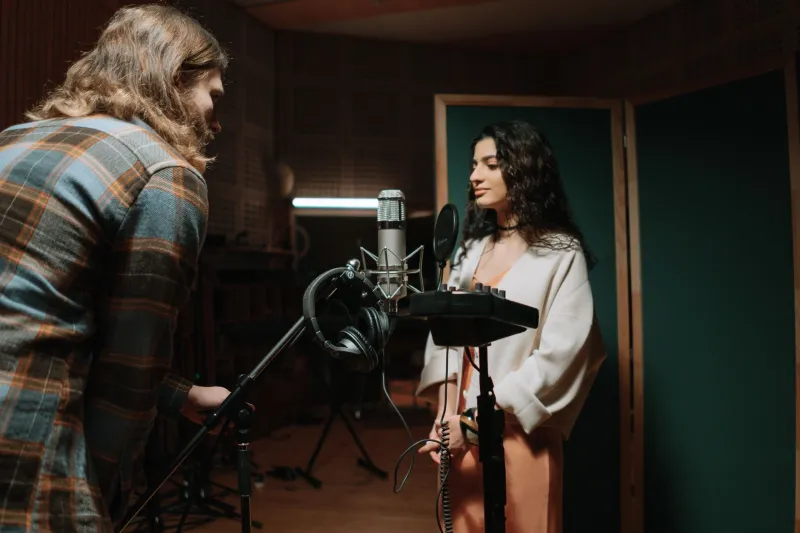
Think about the last time a game genuinely moved you. There's a decent chance a voice was involved — not the music, not the visuals, but the specific inflection of a line delivery that made a character feel real. That emotional resonance didn't happen by accident. Someone in a recording booth, often working brutal session hours under tight direction, made a choice about how to say those words. And for a long time, the industry treated that person like a replaceable component.
That dynamic is shifting — loudly, and with real consequences for how games get made.
A Strike That Made Studios Listen (Eventually)
The SAG-AFTRA strike against major video game companies wasn't a blip. It was a signal. When voice actors walked out in 2016, it was the longest strike in the union's history at that point, lasting nearly a year before a deal was reached. The issues weren't trivial — session pay, vocal stress protections, and transparency about the projects actors were being hired for were all on the table.
The 2023 Hollywood strikes reignited many of the same conversations, with gaming voice actors watching their film and television counterparts fight battles that felt uncomfortably familiar. AI was suddenly the word in every negotiation room, and for voice actors specifically, the threat wasn't abstract. Synthetic voice replication technology had advanced to the point where a few hours of recorded audio could theoretically generate unlimited new dialogue — forever, without additional compensation or consent.
For studios, this looked like efficiency. For performers, it looked like the end of a career path.
What the Numbers Actually Look Like
Voice acting in games has never been a guaranteed path to financial stability, despite what the high-profile credits might suggest. Session rates vary wildly, residuals — standard in film and television — are largely absent from gaming contracts, and the work itself carries occupational hazards that don't get discussed enough.
Vocal stress injuries are real and career-ending. Actors who specialize in combat grunts, death sounds, and high-intensity action sequences — the kind of audio work that fills the background of every major AAA release — can damage their voices permanently. The recordings required for a single major game can involve thousands of individual audio clips, many of them requiring repeated takes of physically demanding vocalizations.
Meanwhile, the games those performances help sell routinely generate hundreds of millions of dollars. The mismatch between what studios earn and what performers receive isn't a secret, but it's rarely framed as a justice issue within gaming coverage. It's usually treated as a labor dispute — a business negotiation between two parties with competing interests, rather than a question of whether the people who give games their emotional core are being paid fairly for it.
Gamers Are Starting to Connect the Dots
Something interesting has happened in recent years: players have started paying attention to voice cast credits in a way they didn't before. Social media has a lot to do with this. When a beloved voice actor posts about a difficult recording session, or speaks publicly about a contract dispute, their follower base — often made up of fans who love the characters they've voiced — actually engages with it.
The line between "I love this character" and "I care about the person who made this character feel real" is shorter than studios probably expected. When actors like Jennifer Hale, Troy Baker, or Noshir Dalal speak up about industry conditions, their audiences listen. That's a form of leverage that didn't really exist a decade ago, and it's changing the calculus for studios that might prefer these conversations stayed behind closed doors.
Player petitions, social media campaigns, and organized boycott discussions have all emerged in response to specific casting and compensation controversies. The gaming audience, once largely indifferent to labor conditions behind the scenes, is developing something resembling a conscience about it.
The AI Question Nobody Wants to Answer Honestly
Every major studio will tell you they're committed to ethical AI use. What that means in practice varies enormously and is rarely defined with enough specificity to be meaningful. For voice actors, the concern isn't hypothetical future technology — it's contracts being presented right now that include broad language about digital likeness and voice replication rights, often in exchange for a flat one-time fee.
The ask, stripped down, is this: sign over the right for us to replicate your voice indefinitely, for any purpose, and we'll pay you once for it. The actor gets a check. The studio gets a perpetual asset. The math on who benefits more isn't complicated.
SAG-AFTRA has pushed hard for consent and compensation clauses that would require studios to negotiate each new AI use of a performer's voice rather than acquiring blanket rights upfront. Some studios have agreed. Others have pushed back, citing production costs and competitive pressures. The negotiations are ongoing, and the outcomes will set precedents that shape the industry for years.
What a Fair Future Looks Like
The voice actors fighting these battles aren't asking for the moon. The core demands — transparent project disclosure, session rate increases that reflect gaming's revenue scale, meaningful protections against AI voice replication, and compensation structures that acknowledge the long commercial life of major titles — are reasonable by any standard comparison to how performers are treated in adjacent entertainment industries.
Film actors receive residuals when movies hit streaming. Television actors receive compensation when shows are syndicated. Voice actors in games receive a session fee and, typically, nothing else — regardless of whether the game sells 200,000 copies or 20 million.
For an industry that generated over $180 billion globally in 2023, the argument that it can't afford fairer performer compensation doesn't hold up to much scrutiny. What it can't afford, perhaps, is the reputational cost of continuing to treat the talent behind its most beloved characters as a line item to be minimized.
Gamers have enormous cultural power when they choose to use it. The more they recognize voice acting as central to the experiences they love — not a nice-to-have but a core creative contribution — the harder it becomes for studios to keep treating it like one.